

Breathing techniques: Simple practices to improve health and calm the mind
Breathing techniques are powerful tools anyone can use to reduce stress increase focus and support physical health. This article explores practical breathing methods the science behind them and how to include these practices in daily life. Whether you are new to mind body practices or seeking to deepen a routine these breathing techniques will equip you with clear steps and reliable benefits.
Why Breathing techniques matter
Conscious breathing directly influences the autonomic nervous system the network that manages heart rate digestion and the stress response. When breathing is shallow and fast the body stays in a heightened state which can lead to chronic stress and poor sleep. By learning to breathe more fully and deliberately you can shift into a calmer physiological state reduce anxiety and improve resilience. Many athletes musicians and professionals use breathing techniques to raise performance and maintain calm under pressure.
Key benefits supported by research
Regular practice of structured breathing can deliver multiple benefits. Some of the most consistent effects found in research include reduced heart rate and blood pressure improved mood and lower levels of stress hormones. Breathing practice also helps with sleep quality pain management and attention control. For people with respiratory conditions breathing practice can improve lung function and efficiency. These gains come from both short sessions used at moments of stress and longer daily practice that retrains habitual breathing patterns.
Core Breathing techniques to start today
Below are practical breathing techniques that require no equipment and can be done almost anywhere. Begin with short sessions of five to ten minutes and build gradually as you gain familiarity.
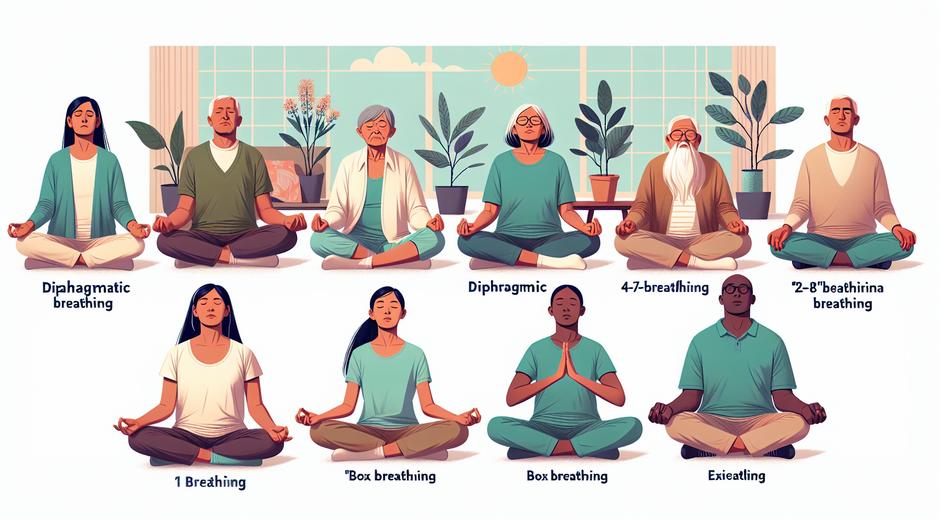
Diaphragmatic breathing
This method encourages full lung expansion by using the diaphragm. Lie on your back or sit comfortably place one hand on your chest and the other on your abdomen. Inhale slowly through your nose feeling your abdomen rise more than your chest. Exhale through your mouth or nose allowing the abdomen to fall. Aim for slow smooth breaths and a relaxed rhythm. Diaphragmatic breathing enhances oxygen exchange and reduces the effort needed to breathe.
Box breathing
Box breathing uses equal counts for each phase to stabilize the nervous system. Inhale slowly counting to four hold for four count exhale for four count and hold for four count before the next inhale. Adjust the counts to match your comfort level keeping all phases equal. This technique is popular with high performance professionals because it creates a steady predictable rhythm that supports focus and calm.
Four seven eight breathing
This pattern helps with falling asleep and calming the nervous system. Inhale quietly through the nose for four counts hold the breath for seven counts then exhale fully through the mouth for eight counts. Repeat the cycle three to five times at first and increase gradually. The longer exhale relative to the inhale signals the body to shift into a relaxed state.
Alternate nostril breathing
This practice comes from traditional mind body systems and promotes balance and mental clarity. Use your right thumb to close the right nostril inhale through the left nostril then close the left nostril with your ring finger open the right nostril and exhale. Continue alternating inhaling through one nostril and exhaling through the other. Keep the breath smooth and gentle. This technique is effective for calming the mind before meditation or stressful tasks.
Pursed lip breathing
Pursed lip breathing helps control shortness of breath and improves air flow. Inhale through the nose and exhale slowly through pursed lips as if gently blowing out a candle. Make the exhale longer than the inhale. This method lengthens the exhalation phase eases breathing effort and supports better oxygenation especially during physical activity.
How to build a daily breathing practice
Consistency matters more than duration. Start with short sessions integrate practice into existing routines and use cues like waking up or preparing for sleep. Keep these steps in mind
- Choose a time and place you can return to daily even if only for a few minutes
- Begin with two to five minutes then add time as your comfort grows
- Use guided audio or a timer if you find structure helpful
- Combine breathing with gentle movement or stretching for added benefit
- Practice when stress arises to reinforce the calming effect in real life situations
Breathing techniques for fitness and performance
Proper breathing supports stamina and recovery during exercise. Focused techniques improve oxygen delivery and help manage exertion. For endurance activities try breathing in a rhythm that coordinates with steps or strokes to maintain steady oxygen supply. For strength work use an inhale before effort and an exhale during exertion to stabilize the core and support force production. Athletes can benefit from specialized breathing training that targets respiratory muscle endurance. For more sports specific breathing resources and training tips visit SportSoulPulse.com which offers tailored content for active people looking to optimize breath control and recovery.
Common mistakes and how to avoid them
Even simple techniques can be less effective if practiced incorrectly. Avoid these pitfalls
- Breathing too quickly which increases tension rather than reduce it
- Using only upper chest movement instead of engaging the diaphragm
- Straining to hold breath beyond comfort which can cause lightheadedness
- Expecting immediate dramatic change which can lead to frustration
Focus on gentle steady progression and pay attention to how your body responds.
Who should take care when practicing breathing techniques
For most people breathing techniques are safe but certain medical conditions require caution. If you have a history of severe respiratory disease heart disease or uncontrolled high blood pressure consult a healthcare professional before beginning a new breathing practice. Pregnant people and those with vertigo or recent surgery should also seek guidance to adapt techniques safely. Simple modifications like reducing counts or performing practice while seated can make breathing techniques accessible to many individuals.
Measuring progress and staying motivated
Track simple metrics like sleep quality perceived stress and daily mood to see changes over time. Note improvements in how quickly you calm down during a stressful moment or how well you manage exertion during workouts. Schedule regular check ins with yourself and celebrate small wins. If you want curated guidance and ongoing content about wellness visit bodywellnessgroup.com to explore articles and programs that support a healthier lifestyle.
Conclusion
Breathing techniques are among the most accessible wellness practices available. With consistent practice you can reduce stress improve focus enhance sleep and support physical performance. Start small choose one or two techniques that resonate with you and make them part of your daily routine. Over time these simple practices can produce meaningful improvements in both mental and physical health making breathing a foundation of sustainable wellbeing.